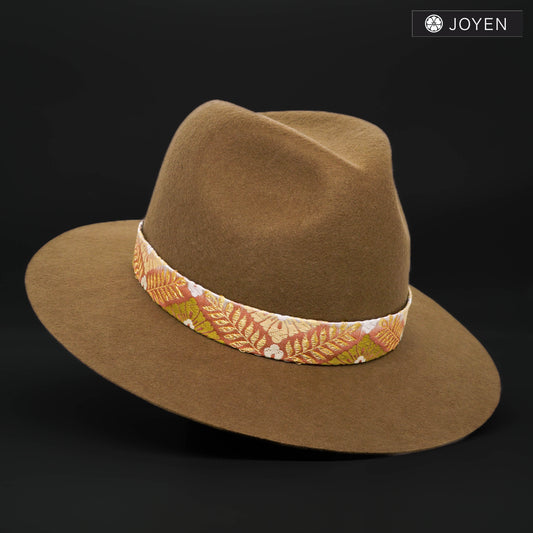
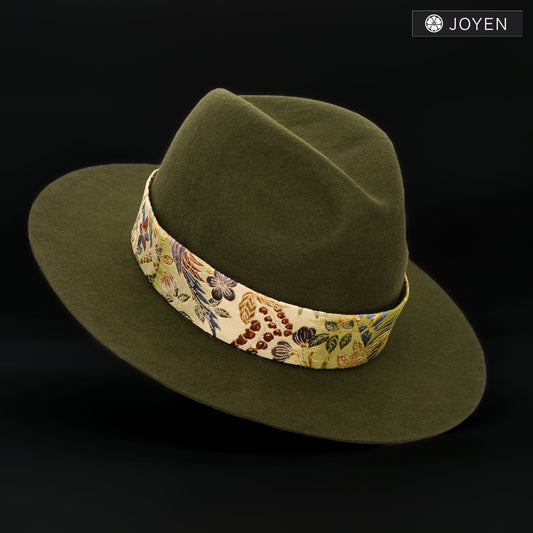
ABOUT KIMONO CUSHIONS BY JOYEN

When light touches the weave, the story begins
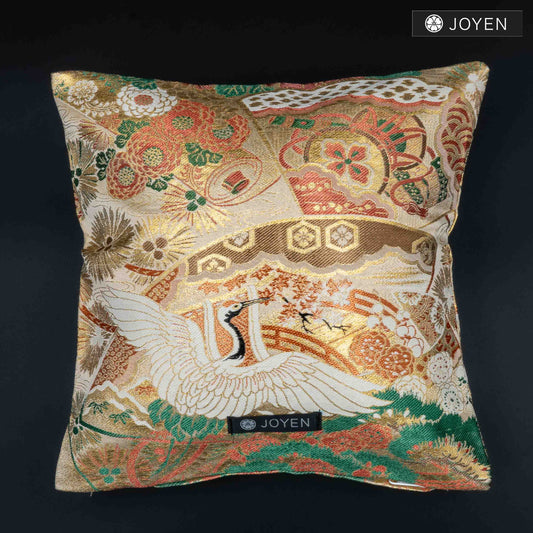
The soft glow of morning, the warm flicker of an evening lamp. When caught in the light, the cushion on your sofa reveals a different expression, almost like a living thing. The iridescent shimmer of raden (mother-of-pearl) shifts with every angle, accompanied by the deep, meditative shadows of gold thread.
This is neither a print nor simple embroidery. It is Kyoto’s Nishijin-ori, a weaving tradition spanning 1200 years. It is a three-dimensional textile art created by layering thousands of fine silk threads
However, these breathtaking textiles were not originally made for cushions. They were woven as obi (kimono sashes), and for a long time, they slept silently in the depths of Japanese tansu (chests). Too beautiful to be forgotten, too precious to be lost.


Japanese beauty, not for galleries, but for life
JOYEN's mission is dedicated to upcycling the obi—the pinnacle of Japanese kimono culture— into unique, one-of-a-kind cushions that seamlessly fit into modern lifestyles.
The material used is Nishijin-ori, a traditional textile from Kyoto with over 1200 years of history. This technique, which weaves real gold leaf, platinum leaf, and thinly shaved shells into silk, is so intricate that even a master craftsman can only weave a few centimeters a day.
JOYEN re-edits this art into a functional form without compromising its inherent value. When acquiring a KIMONO CUSHION, you are not just acquiring a modern Nishijin-ori cushion; you are participating in the preservation of Japanese craftsmanship and a sustainable way of living

The luxury of the unique, woven into your daily routine
Each KIMONO CUSHION is a curated moment. From an obi over four meters long, we meticulously select and trim only the most extraordinary sections, down to the millimeter. No two pieces possess the same pattern or hue.
Master artisans have transformed this thick, sturdy vintage fabric into cushions that offer both the durability required for modern life and a refined tactile comfort. The presence of the gold thread and mother-of-pearl, quietly changing expression with the light, transforms the very atmosphere of a room.

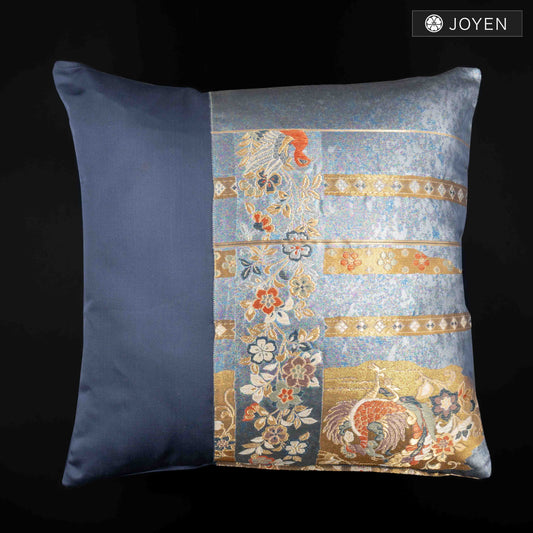
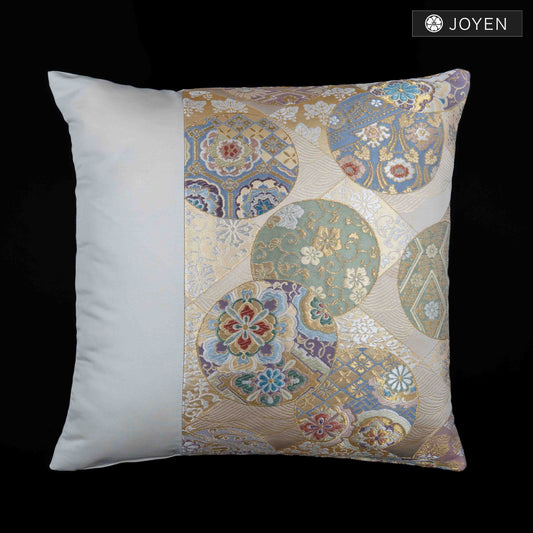
Large Size (45cm x 45cm/18in x 18in)
Perfect as a statement piece or a prestigious gift. Includes a high-quality made in Japan insert, ready to use.
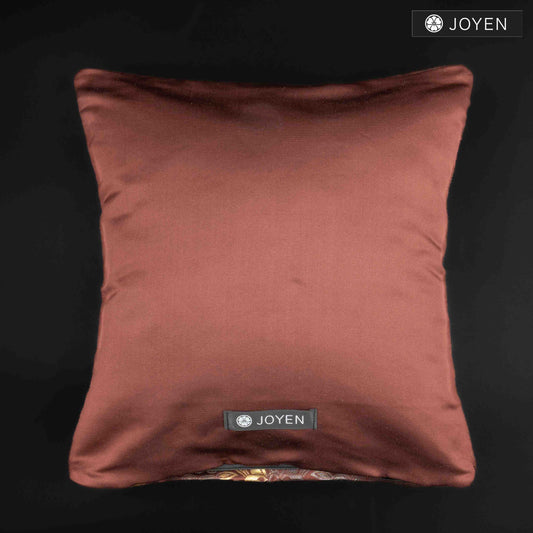
Due to the traditional width of authentic Japanese obi (kimono sashes), which is limited by the dimensions of traditional looms, the 45cm x 45cm cushions feature a special design. Approximately one-third of the surface is crafted from the reverse side that complements the ornate pattern. This allows us to create this larger size while preserving the integrity of the original vintage fabric.

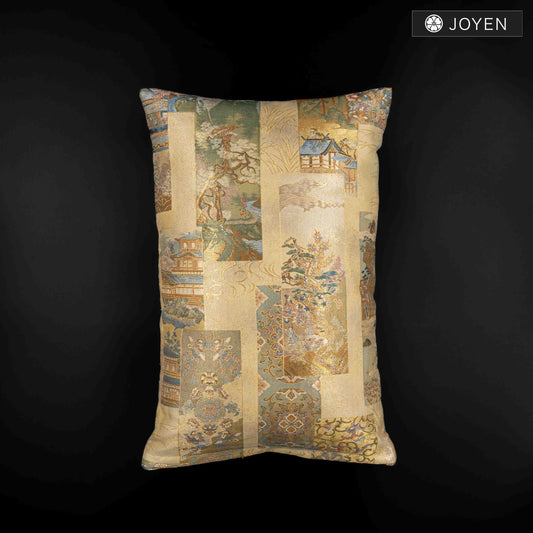
Medium Size (30cm x 45cm/12in x 18in)
These rectangular shaped cushions work equally well in a vertical or horizontal oriention either as accents to the large cushions or stand alones
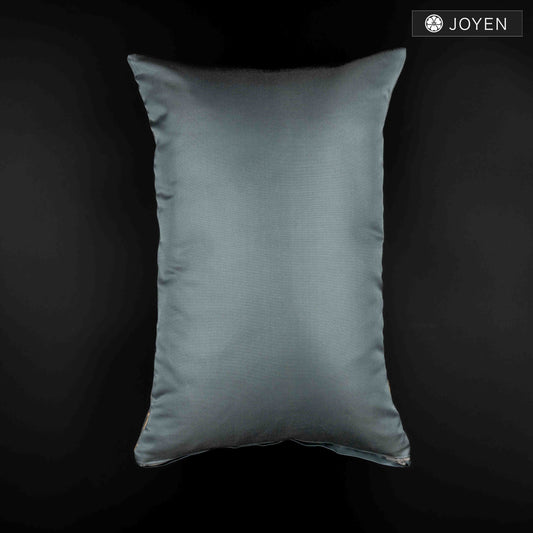
Our 30cm x 45cm cushions are designed to showcase the "face" of Japanese tradition. By using the complementary solid or patterned silk fabric for the back, we are able to carefully preserve and utilize more of our limited vintage obi collection. Each piece is a unique "painting" made of silk, backed by a sturdy fabric for long-lasting comfort.

Small Size (30cm x 30cm/12in x 12in)
Designed for intimate spaces or as an accent. Combining different sizes creates a sophisticated rhythm and color in your interior.
Our 30cm x 30cm are also design to showcase the "face" of Japanese tradition. By using the complementary solid or patterned silk fabric for the back, we are able to carefully preserve and utilize more of our limited vintage obi collection.
All our cushions are filled with slightly oversized made-in-Japan insert for a fluffy look and feel.


Selection of Large Cushions (45cm x 45cm)
-

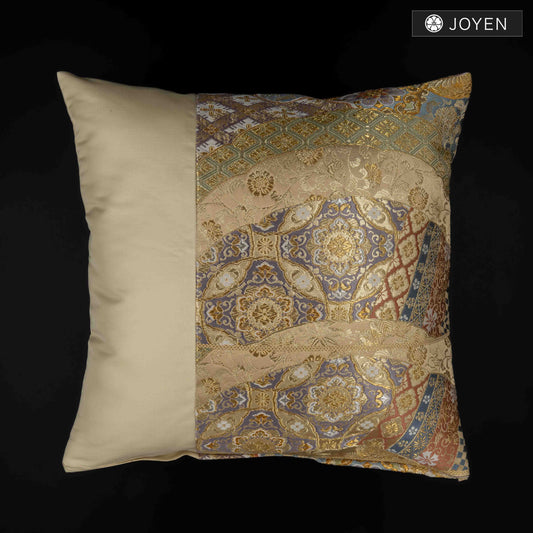 売り切れ
売り切れクッション 0592
通常価格 $128.00 USD通常価格 -

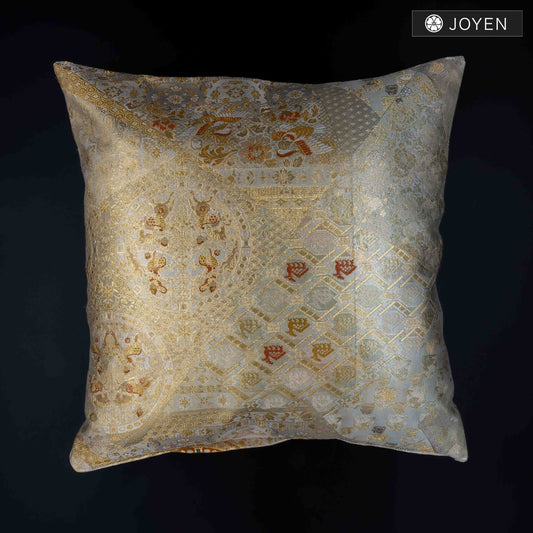 売り切れ
売り切れクッション 0597
通常価格 $128.00 USD通常価格 -

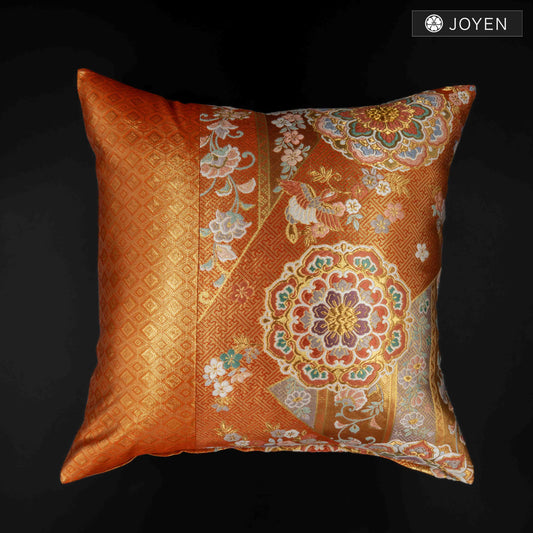 売り切れ
売り切れクッション 0598
通常価格 $128.00 USD通常価格 -

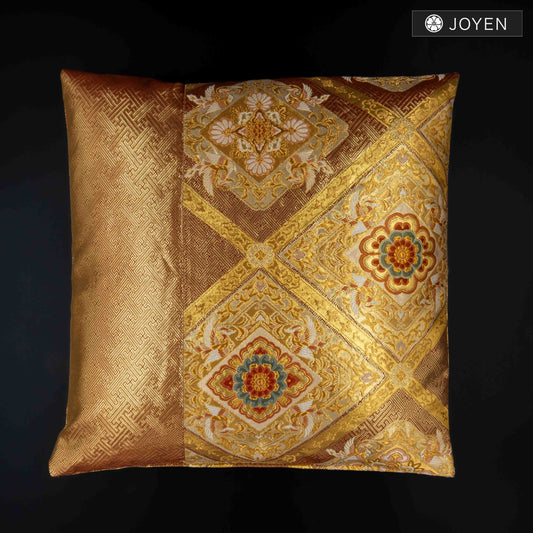 売り切れ
売り切れクッション 0599
通常価格 $128.00 USD通常価格 -

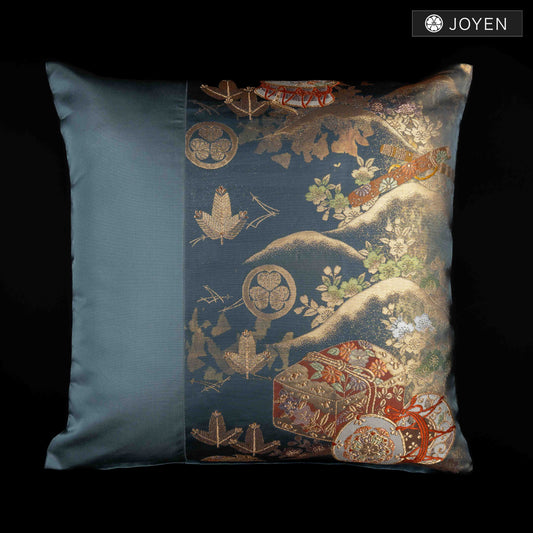 売り切れ
売り切れクッション 0646
通常価格 $128.00 USD通常価格 -

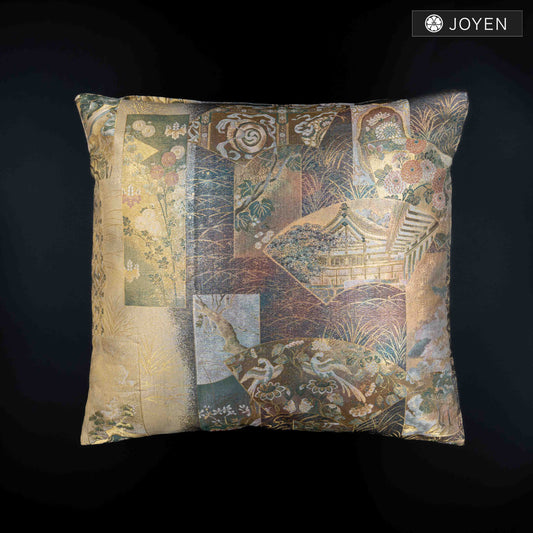 売り切れ
売り切れクッション 0651
通常価格 $128.00 USD通常価格 -

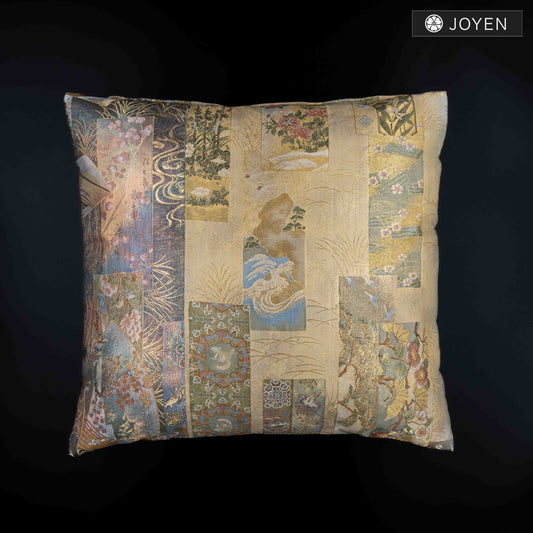 売り切れ
売り切れクッション 0652
通常価格 $128.00 USD通常価格 -

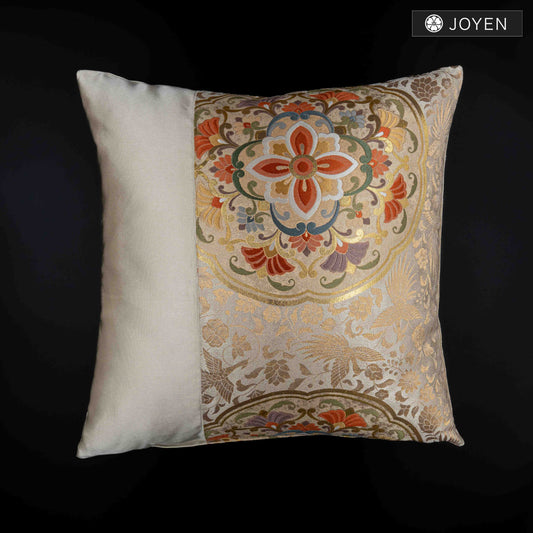 売り切れ
売り切れクッション 0657
通常価格 $128.00 USD通常価格 -

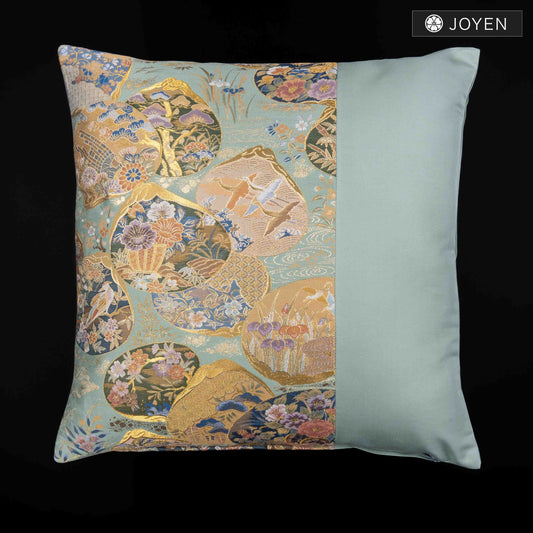 売り切れ
売り切れクッション 0702
通常価格 $128.00 USD通常価格 -

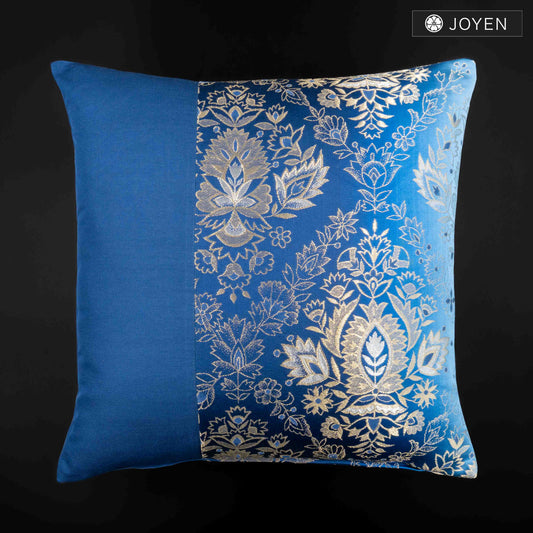 売り切れ
売り切れクッション 0704
通常価格 $128.00 USD通常価格 -

 売り切れ
売り切れクッション 0706
通常価格 $128.00 USD通常価格 -
クッション 45cmx45cm 0708
通常価格 $128.00 USD通常価格


Selection of Medium Cushions (30cm x 45cm)
-

 売り切れ
売り切れクッション 0654
通常価格 $71.00 USD通常価格 -

 売り切れ
売り切れクッション 0648
通常価格 $71.00 USD通常価格 -

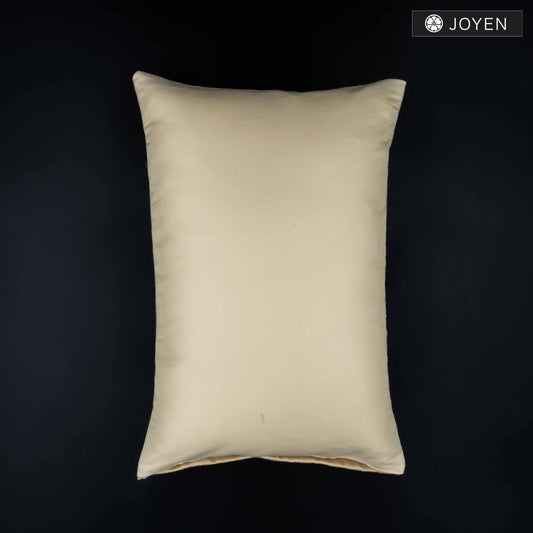 売り切れ
売り切れクッション 0594
通常価格 $71.00 USD通常価格 -

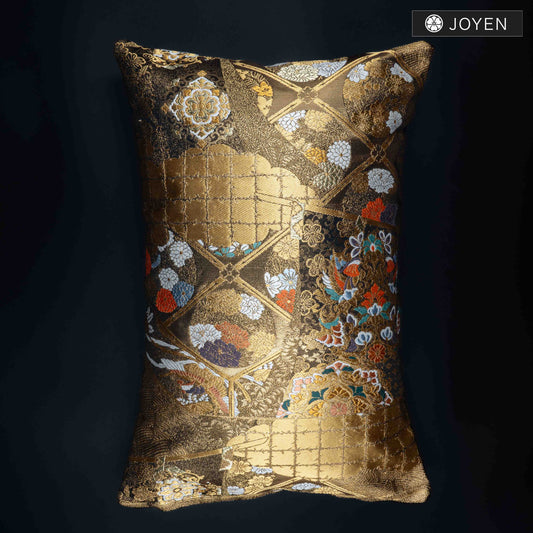 売り切れ
売り切れクッション 0514
通常価格 $71.00 USD通常価格 -

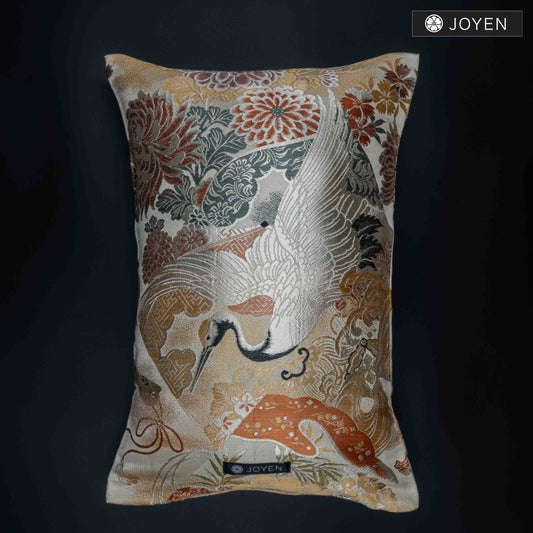 売り切れ
売り切れクッション 0487
通常価格 $71.00 USD通常価格 -

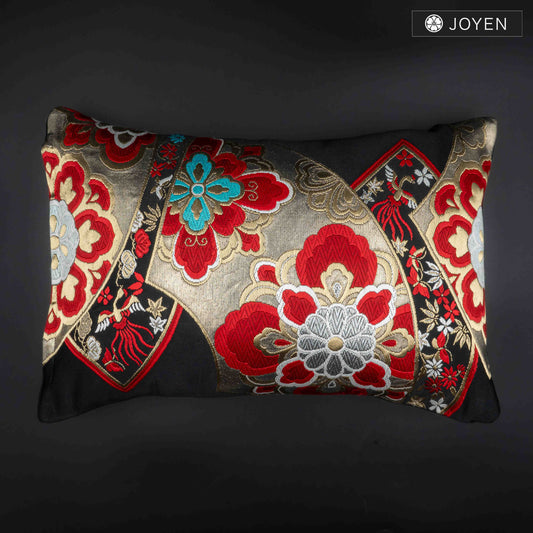 売り切れ
売り切れクッション 0468
通常価格 $71.00 USD通常価格 -

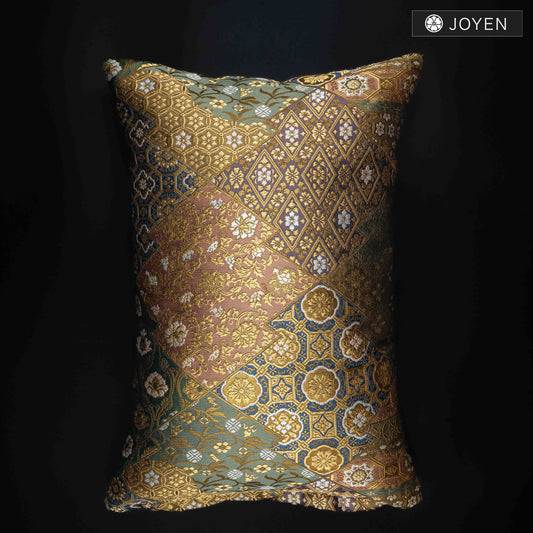 売り切れ
売り切れクッション 0450
通常価格 $71.00 USD通常価格 -

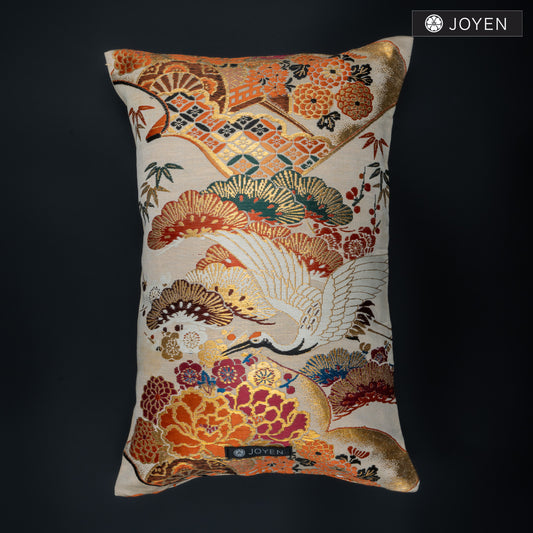 売り切れ
売り切れクッション 0417
通常価格 $71.00 USD通常価格


Selection of Small Cushions (30cm x 30cm)
-

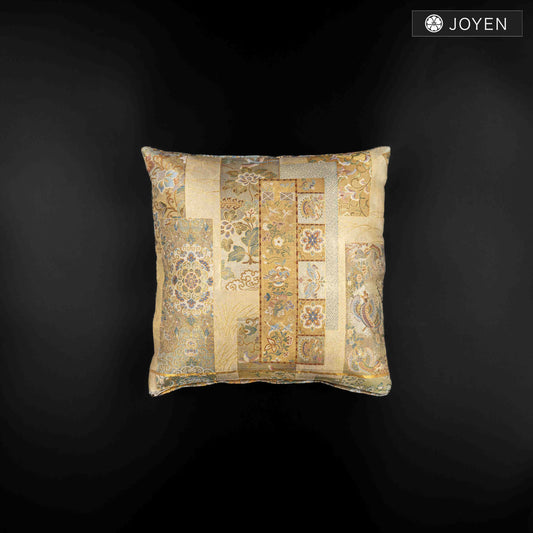 売り切れ
売り切れクッション 0656
通常価格 $51.00 USD通常価格 -

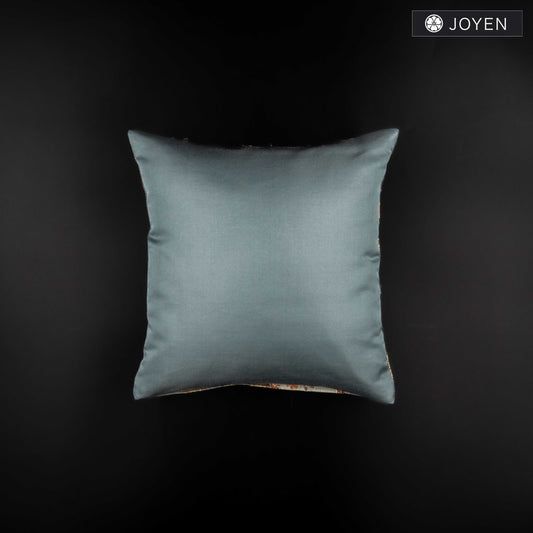 売り切れ
売り切れクッション 0650
通常価格 $51.00 USD通常価格 -

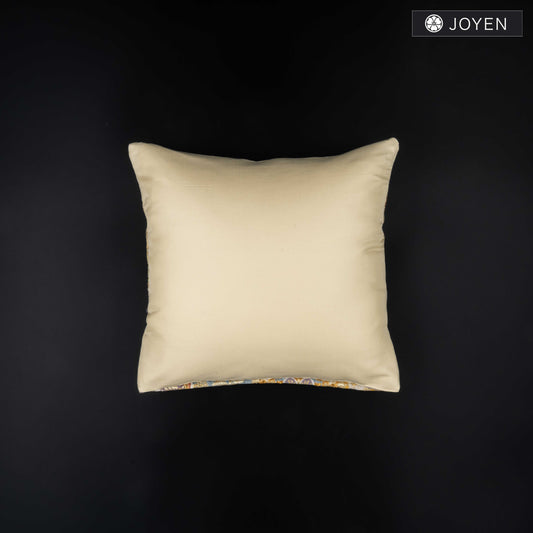 売り切れ
売り切れクッション 0595
通常価格 $51.00 USD通常価格 -
クッション 0566
通常価格 $51.00 USD通常価格 -

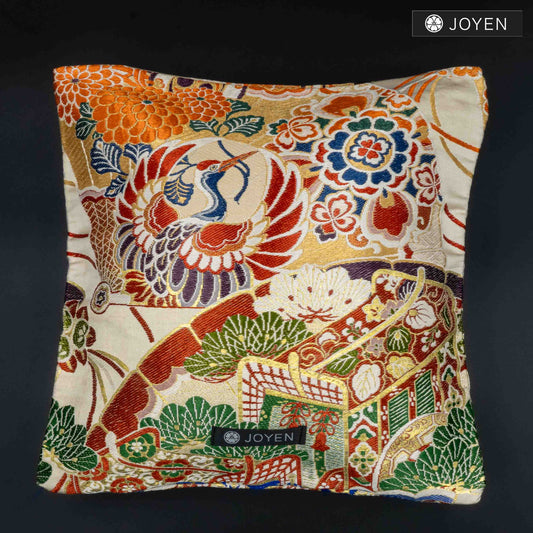 売り切れ
売り切れクッション 0554
通常価格 $51.00 USD通常価格 -

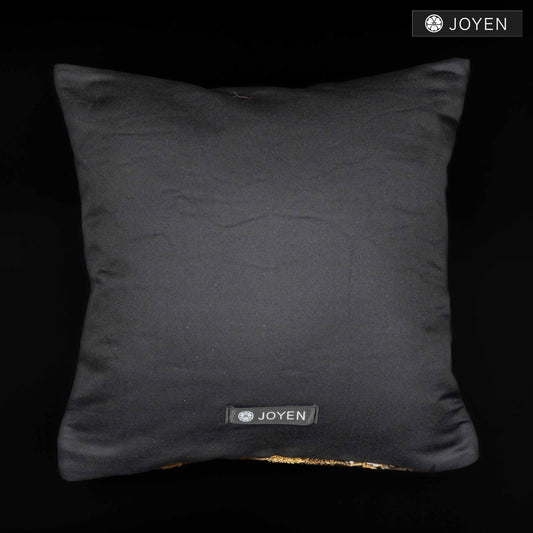 売り切れ
売り切れクッション 0511
通常価格 $51.00 USD通常価格 -

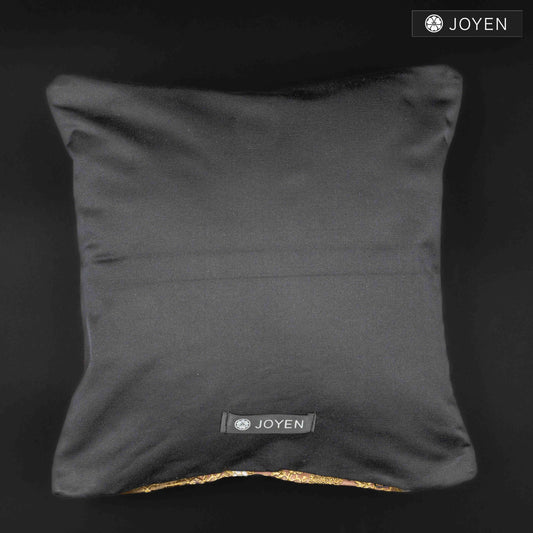 売り切れ
売り切れクッション 0448
通常価格 $51.00 USD通常価格 -

 売り切れ
売り切れクッション 0442
通常価格 $51.00 USD通常価格




The Backstory: Why did Japanese beauty stop being used
Nishijin woven obi were created for the most significant milestones and ceremonies in a person's life. However, as the frequency of wearing kimono declined, many of these obi were left tucked away in chests, unused.
These textiles were born from thousands of threads and an immense investment of time. JOYEN felt a profound sense of loss seeing them stored away as if their role had ended. "If it is beautiful but unused, that is the moment a culture begins to fade."
Yoshimi Bernstein, founder of JOYEN, has been familiar with Japanese culture since childhood. When a friend from overseas asked her to create a gift using an obi, she was once again captivated by the overwhelming beauty of Nishijin weaving. She began creating cushions and accessories for those around her, receiving widespread acclaim. Following an Instagram post during the pandemic, opportunities expanded to Japan Expo in Paris, events in Barcelona, and pop-ups at the Tokyo American Club.
Giving a "second life" to obi that were simply waiting to be discarded became our mission.


Tradition is not something to be preserved; it is something to be updated
KIMONO CUSHIONS are not intended to keep tradition frozen in time. We value the philosophy of warp and weft:
The warp (vertical thread): 1200 years of unwavering history and the mastery of Nishijin weaving.
The weft (horizontal thread): Modern living, contemporary sensibilities, and the creative freedom of upcycling.
By reweaving the "weft" of a new era into the "warp" of history, we ensure tradition survives into the future. The upcycling performed by JOYEN is more than mere reuse. WIth each obi, we discern the most outstanding moment and calculate the composition for the cushion. It is not an act of using remnants, but a deliberate choice to maximize beauty and significance.
KIMONO CUSHIONS are born at the intersection where the warp of history meets the weft of modern life


Participating in culture, rather than consuming it
JOYEN’s craftsmanship is not suited for mass production prioritized by efficiency. The process of identifying the unique pattern of each obi and tailoring it with care is a story we believe should be shared with our supporters.
Your support is more than a purchase. A JOYEN CUSHION is not product for consumption; it is a mechanism for participation. It is an invitation to join the "cultural cycle"—connecting Japanese craft to the next generation, creating demand for artisans, and fostering successors.
While international luxury brands highly value Japanese materials, we want to change the reality where Japan itself is not fully utilizing its own treasures. That is our sincere wish.
Selected Other Products by JOYEN
-
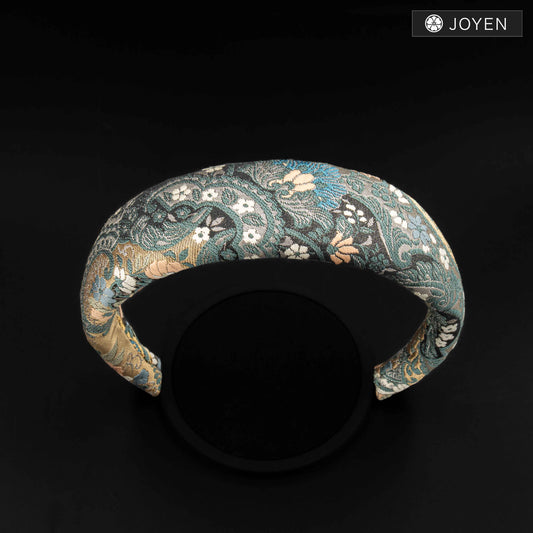
カチューシャ M 0675
通常価格 $77.00 USD通常価格 -
カチューシャ L 0658
通常価格 $96.00 USD通常価格 -
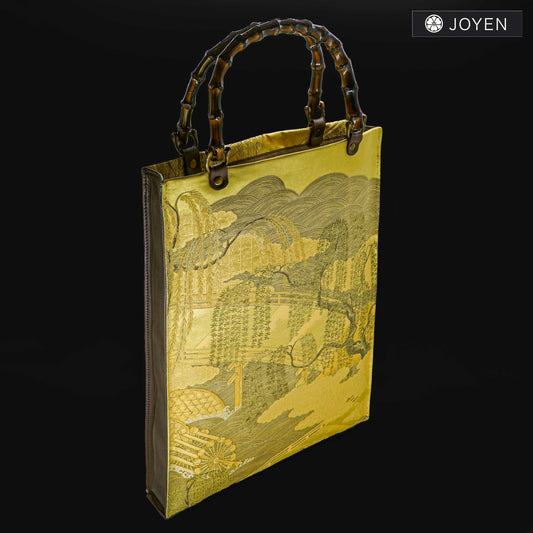
西陣PCバッグ 275
通常価格 $638.00 USD通常価格 -

 売り切れ
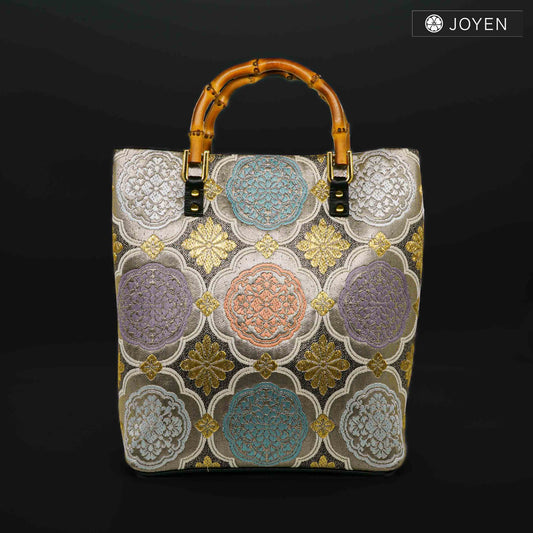
売り切れ西陣バッグ S 236
通常価格 $224.00 USD通常価格